Wednesday, 17 February 2016

Heavy Equipment Needs Stainless Steel Castings to Combat Heat and Corrosion


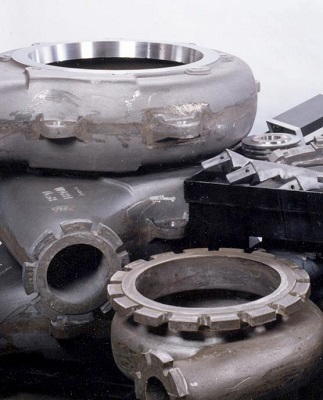
Industries such as mining, forestry and construction require the use of heavy-duty machines that are often subject to intense working conditions resulting in extreme wear and tear. In many cases, equipment wear parts made with steel castings are responsible for extending machine operating life and reducing downtime. These types of castings, for example, provide mining wear parts for a wide range of equipment including crushers, chute liners, mine car wheels and pumps. When resistance to heat or corrosion is needed, wear parts produced with stainless steel provide the solution. An Overview of Stainless Steels To be classified as corrosion resistant, stainless steel will contain a minimum of 10.5% chromium to provide additional resistance in aqueous environments where corrosion is a factor. The chromium content enables the formation of a protective film that increases corrosion resistance and, at higher temperatures, improves resistance to oxidation and enhances rupture streng
http://bit.ly/1QiPQB8

Australian Mine Illustrates the Importance of Mine Skips and Shaft Hoisting


Located in Queensland, Australia, Ernest Henry Mining is a Glencore company that first began operating in 1998 as an open pit mine. As the open pit’s economic life span was due to end in 2011, plans in 2009 were confirmed to invest $589 million and transform the mine to underground shaft mining. By early 2012, a 5 km decline had been established to enable the trucking of ore from underground to the surface. Rates of production with this method were approximately three million tonnes annually resulting in about 25,000 tonnes of copper concentrate and 35,000 ounces of gold concentrate per year. By moving to shaft hoisting, 2015 production was forecast to double to six million tonnes of ore. That rate is projected to be achieved on an annual basis over the extended lifespan of the mine to 2026.
http://bit.ly/1KmyeZf

Tuesday, 16 February 2016

The Role of Mine Cages in a Successful Mining Operation


Underground mining requires a number of different transportation systems. To effectively move miners and their equipment, for example, a dependable mine shaft cage is necessary. A mine’s success relies on the efficient operation of this component. If a serious problem occurs with the cage, conveyance activities must be suspended to ensure the safety of the miners and, when that happens, production is impeded. Improved Productivity A well built and properly maintained mine cage can also help to improve worker productivity. Workers feel more comfortable in their underground environment knowing that they have a readily available and trustworthy means of transport to take them back to the surface when necessary. As well, a dependable mine cage can effectively transport the equipment required to keep a mine operating at optimal production levels.
http://bit.ly/1Kmy9o8

Factors Affecting the Efficient Operation of Mining Cars in Underground Operations


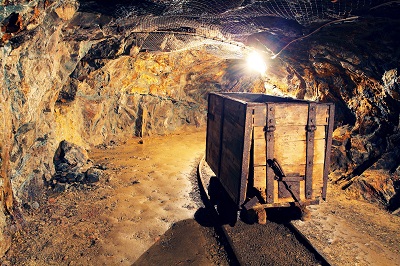
Mining operations greatly rely on machinery and conveyances. The right equipment has to be in place so that extracting and transporting of ore can be accomplished as efficiently as possible. Mining cars are one type of underground conveyance equipment that greatly influences the activities at a mine site. They make it possible to move ore towards hoisting areas for transport to the surface. Mine cars also serve as a transport for tools, equipment, and even workers. Compromising the transport system in a mine will affect the productivity and success of numerous mining activities. Sufficient budgets for regular maintenance and updating of mine cars, for example, have to be allocated to ensure that they remain in good operating condition each and every day. There are a number of considerations to be made when a mine is implementing a conveyance system.
http://bit.ly/1Kmy3wR

Friday, 22 January 2016

Tips on Mining Wear Parts and Heavy Machinery


It is important to incorporate high-quality mining wear parts on underground equipment that is constantly exposed to corrosion and abrasion
http://bit.ly/1RUw7OT

Thursday, 21 January 2016

Head Frames and Mine Skips: Saying Farewell to C-Shaft


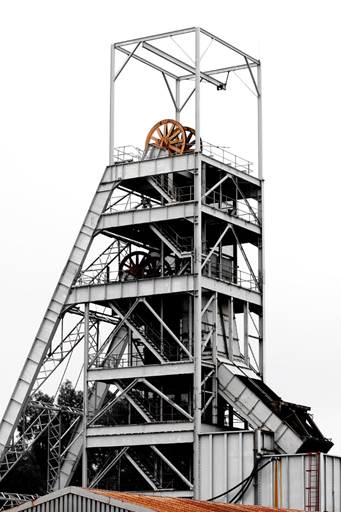
The C-Shaft headframe in Yellowknife, originally constructed in 1948, has been one of the most iconic images in the region. The headframe has been there for the entire lives of many local residents. It is a landmark that is displayed on t-shirts, stamps and in history books. However, the headframe is currently being dismantled as part of the Giant Mine remediation project that started in 2013. People have mixed feelings about the structure’s demise. Some feel it is like erasing part of their history while others believe that it’s time to move on. Yellowknife’s C-Shaft headframe was used by workers for over 50 years for transportation up and down the mine shaft, which is about 640 meters deep. Safety concerns led to the decision to eliminate the C-Shaft headframe to enable early site stabilization for the remediation project.
http://bit.ly/1Va2AOw

Inspect Mine Shaft Cages to Comply with Health and Safety Legislation


Mining regulations stipulate that new mine cages have to meet the updated elevator standards under the Occupational Health and Safety Act that is geared towards keeping mine workers as safe as possible. Mining companies and employers need to source top quality, dependable conveyance elevators that are durable enough to withstand the harshest conditions, yet keep the safety of workers ensured as a top priority. It's possible to arrange for conveyance inspection at mines to be conducted by experts in the field of cage design who can inspect for worker safety issues as well as operational load needs. Ultimately, a mine shaft performs dual operations within the mining industry – conveying workers down into the mine and up to the surface, and hauling materials between locations.
http://bit.ly/1Va2jeB

Wednesday, 20 January 2016

Today’s Mines have Plenty of Options when it comes to Mining Cars


Mining is a vital industrial activity that has been taking place for many years in North America and around the world. Life without mining would simply be impossible because many of the items that people use in their everyday lives are manufactured using the raw materials that come out of the earth. As well, mining is a major economic driver in most of the countries where mine operations are located. The benefits that mining has provided to society have cemented its significance. As mining has grown, so has the supply-side of the industry. This means that mining companies have a greater choice when it comes to obtaining equipment such as quality mining cars.
http://bit.ly/1RUsBUo

Thursday, 19 November 2015

Methods in Achieving Wear and Corrosion Resistance for Steel Castings


Due to excessive heat and friction involved in mining, corrosion and wear is one of the most prevalent problems in the industry. Millions are lost due to halted productions, worker injuries and unscheduled repairs as a result of wear and corrosion on equipment. Although replacement and repairs are an inevitable part of maintaining mining equipment, there are ways to minimise losses for continuous usage under harsh conditions. There are a number of methods that can slow down the effects of wear and corrosion particularly for crucial parts such as heat-resistant steel castings. Choice of Material The best way to ensure that parts will hold up against the pressure is to make them with excellent materials. Aside from strength, dent resistance, toughness and ductility, heat resistance should be a top characteristic for materials. Crafting parts using such materials will help improve its ability to resist breaking or wearing down under extreme temperatures.
http://bit.ly/1QpNsO8

Wednesday, 18 November 2015

Overcoming Challenges in Maintenance of Mine Skips and Other Equipment


Mining is a millennia-old industry that has seen many advancements. Throughout the years, new equipment have been designed to make mining more efficient and safer for workers. Perhaps one of the most problematic aspects of the industry lies in maintenance of loading, dumping and haulage equipment. Due to the harsh nature of the work and the environment, equipment such as aluminum mine skips, cages and various machinery take considerable wear and tear. When one essential equipment is compromised, it could cripple the entire process. Maintenance Challenges Most mine haulage equipment are designed for a mine’s specific needs. As a result, each equipment is unique and require specific measures in order to keep in good shape. Neglected, faulty machinery can lead to accidents and injuries to their operators or other various mine workers. Custom made equipment also require specially crafted spare parts that would most likely be available where it was made in the first place.
http://bit.ly/1QpNoOl

Tuesday, 17 November 2015

Daily Inspection and Maintenance of Mine Cages a Must for Mining Sites


For mining companies specialising in underground mining, they know that each mine is unique, since each of these deposits have their own set of geologic, geochemical, and geophysical characteristics. The same holds true for mine shafts and mining cages, and though these are built in accordance to applicable standards and regulations, these are ultimately designed to meet the needs of the operation and the site. Lost Revenues due to Unmaintained Cages Regardless of how the shafts and cages are built, these are still subject to the forces of gravity, corrosion, and age. Ignoring these elements and letting them accumulate on the mining shaft can cause an unplanned shutdown, which can have a negative economic impact on a mining company.
http://bit.ly/1QpNnKh

Sunday, 15 November 2015

Mining Companies See Underground Mining Cars a Feasible Investment


While numerous mining companies still conduct surface mining in their sites, the costs that come along with it may become prohibitively expensive on the long run. One particular indicator is the strip ratio, or the number of waste materials in units that a mine site must remove in extracting one unit of ore. Mining companies seeing a larger strip ratio can then turn to underground mining as a more cost-efficient and land-friendly investment. The Objective of Underground Mining What underground mining does is to extract the ore from the earth in a safe and economical way without producing too much waste. Underground mining is particularly feasible for mining companies specialising in the extraction of minerals, rocks, and precious stones that are found far beneath the ground. This is also an effective option for companies mining rocks or minerals on the side of a mountain.
http://bit.ly/1QpNh5i

Friday, 30 October 2015

Steel Castings and Other Machinery Parts: Importance in Mining Safety


Abrasion, heat, impact, friction, chemical exposure, mechanical stress, and daily wear-and-tear eventually take their toll on equipment, which is why parts need to be maintained regularly and replaced as needed to minimize downtime. In this light, it’s important to choose parts, such as steel castings, that are of optimal quality and able to meet their intended functions. For this reason, manufacturers such as Wabi Iron & Steel Corp. focus on custom manufacturing so that parts can be built to satisfy unique operating requirements. Watch for Signs of Wear and Tear Being aware of the signs of deterioration is crucial to the maintenance of mining equipment. Spotting the subtlest signs informs the operators of significant issues, such as when it’s time to replace mining wear parts, when the machines need more lubricant, and other similarly important factors.
http://bit.ly/1OXs0zE

Thursday, 29 October 2015

The Essential Role of Heavy-Duty Mine Skips in Underground Mining


Lifting large volumes of materials from the depths of underground mines is a struggle against gravity. It involves carrying dense rock in massive quantities, which equates to immense levels of strain on any equipment used. As such, mining skips must have extraordinarily rugged specifications to maintain efficiency and safety in the excavation process. The skip must be able to carry large loads without being too heavy itself. Through the years, the mining industry has seen various developments in how skips are constructed, from the materials used to the design of the units. The use of aluminum alloys is pretty common because of the metal’s exceptional strength-to-weight ratio. The material’s downside is low-wear resistance, which is addressed by lining skips with abrasion-resistant steel, mild steel, or rubber.
http://bit.ly/1OXrS33

Wednesday, 28 October 2015

Quality Mine Cages and Other Equipment Support Mine Safety


No safety program will be enough to mitigate risks associated with poorly designed mining equipment. Incorporating quality mining equipment, from mine cages to mining cars, goes a long way in reducing accidents in the mining workplace. If you plan to use the technology of the future in your mining operations, you stand to enhance their effectiveness if you have proven mining equipment in place. Quality Mining Equipment in Canada Leading manufacturers, such as Wabi Iron & Steel Corp., produce the most trusted equipment in the mining industry. From mine shaft cages to rail cars, Wabi designs and manufactures loading and conveyance systems that meet the strictest of quality and safety standards.
http://bit.ly/1OXrDVP

Tuesday, 27 October 2015

Mining Cars and Beyond: Extending the Mineral Exploration Tax Credit is Good for Canada’s Mining Industry


Whether the 15 percent tax credit is an effective policy or not, the idea to encourage more mining exploration is a sound one. When mineral deposits that exhibit great potential are discovered, mine development soon follows. In turn, new mines require underground equipment such as, skips, cages, loading systems, rail haulage cars, mine car wheels, etc. which is good for the mining supply and services sector. Quality Mining Equipment in Canada Top mining equipment manufacturers, like Wabi Iron & Steel Corp., can supply superior conveyance systems for your mining operation. Companies such as Wabi have the engineering capabilities and fabrication facilities that enable them to produce quality equipment, from wheels for mining cars to loading and dumping systems, skips and cages.
http://bit.ly/1OXqwW1

Monday, 21 September 2015

What Enables Manufacturers to Produce the Toughest Steel Castings?


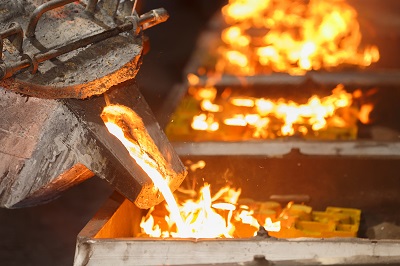
Metal casting involves the creation of alloys through the melting and molding of different types of metal. This process plays a vital role in the production of high-quality metals used in mining equipment manufacturing, construction, and various other industries. Steel is among the most extensively cast metals. It is an alloy of iron and other elements, primarily carbon. Different mixtures produce different types and properties of steel; with the right mixture, extremely tough and corrosion-resistant materials can be produced. Steel is one of the very few metals that serve a wide variety of uses because of its versatility when combined with other materials.
http://bit.ly/1iLulQA

Saturday, 19 September 2015

Quality Mine Skips Increase Mining Productivity and Reduce Risks


Mining is one of Canada’s richest sources of income and employment. Over 380,000 people benefit from this industry. Mining has long fueled the economy by providing the building blocks of industrialization, which in turn has created more businesses and job opportunities. Dangers in the Mine Miners face various kinds of risk every time they venture deep into the earth. Accidents due to human, mechanical or natural causes sometime happen. An underground rock fall, for instance, can delay operations and entail lengthy and costly repairs. Equipment malfunction or inefficiency can also have negative effects on production. These situations not only put miner safety at risk but they also curtail a mine’s overall productivity which, in turn, impacts profitability.
http://bit.ly/1iLu7Ja

Thursday, 17 September 2015

Underground Mining: The Role and Characteristics of Mine Cages


Mining is an industry that pushes the envelope in engineering, and things get even more extreme when it comes to underground mining. The use of underground mines is necessary for excavating at depths greater than 60 metres (the point where surface mining turns inefficient). How Stuff Works highlighted the wide range of depths that underground mines can reach, from 750 metres for coal mines and over 2 kilometres for uranium mines. The Mine Cage Every underground mine has mine shafts, and each has an indispensable function. Ventilation shafts clear the toxic fumes that are by-products of blasting and drilling. Recovery shafts carry the ores from the bottom of the mine to the surface. Access shafts carry personnel and equipment to and from the surface. All shafts have crucial components, one of the most notable are mine cages.
http://bit.ly/1Kc9yfY

Tuesday, 15 September 2015

Need for Custom-Made Mining Cars and Other Equipment in the Industry


The mining business is a vast industry that it is divided into five segments: metal ore mining, non-metal mineral mining, coal mining, supporting activities, and gas and oil extracting. The requirements can differ greatly within each segment which emphasizes the need for custom-made equipment. For example, precious metal mining cars need to operate in different environments versus those used for mining nickel ore. Choosing equipment that would be compatible to a certain application and specific tasks can be a challenge especially when each mine is different. Fortunately, through modern technology and advances in engineering, custom-made mining cars and other equipment can be crafted to fit each mine’s needs. Materials Using the right materials for building mining cars is important to ensure efficient rail haulage workflow in a mine. If a mining car is not constructed properly to carry required loads, it could slow down the entire operation.
http://bit.ly/1iLtC1Z