Friday, 22 January 2016

Tips on Mining Wear Parts and Heavy Machinery


It is important to incorporate high-quality mining wear parts on underground equipment that is constantly exposed to corrosion and abrasion
http://bit.ly/1RUw7OT

Thursday, 21 January 2016

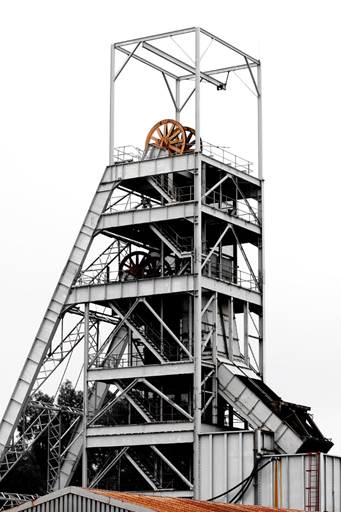
Head Frames and Mine Skips: Saying Farewell to C-Shaft


The C-Shaft headframe in Yellowknife, originally constructed in 1948, has been one of the most iconic images in the region. The headframe has been there for the entire lives of many local residents. It is a landmark that is displayed on t-shirts, stamps and in history books. However, the headframe is currently being dismantled as part of the Giant Mine remediation project that started in 2013. People have mixed feelings about the structure’s demise. Some feel it is like erasing part of their history while others believe that it’s time to move on. Yellowknife’s C-Shaft headframe was used by workers for over 50 years for transportation up and down the mine shaft, which is about 640 meters deep. Safety concerns led to the decision to eliminate the C-Shaft headframe to enable early site stabilization for the remediation project.
http://bit.ly/1Va2AOw

Inspect Mine Shaft Cages to Comply with Health and Safety Legislation


Mining regulations stipulate that new mine cages have to meet the updated elevator standards under the Occupational Health and Safety Act that is geared towards keeping mine workers as safe as possible. Mining companies and employers need to source top quality, dependable conveyance elevators that are durable enough to withstand the harshest conditions, yet keep the safety of workers ensured as a top priority. It's possible to arrange for conveyance inspection at mines to be conducted by experts in the field of cage design who can inspect for worker safety issues as well as operational load needs. Ultimately, a mine shaft performs dual operations within the mining industry – conveying workers down into the mine and up to the surface, and hauling materials between locations.
http://bit.ly/1Va2jeB

Wednesday, 20 January 2016

Today’s Mines have Plenty of Options when it comes to Mining Cars


Mining is a vital industrial activity that has been taking place for many years in North America and around the world. Life without mining would simply be impossible because many of the items that people use in their everyday lives are manufactured using the raw materials that come out of the earth. As well, mining is a major economic driver in most of the countries where mine operations are located. The benefits that mining has provided to society have cemented its significance. As mining has grown, so has the supply-side of the industry. This means that mining companies have a greater choice when it comes to obtaining equipment such as quality mining cars.
http://bit.ly/1RUsBUo

Thursday, 19 November 2015

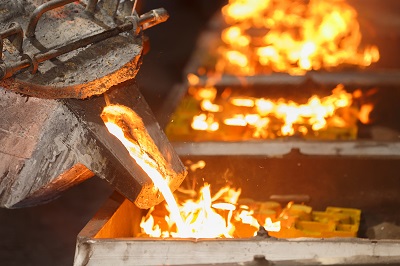
Methods in Achieving Wear and Corrosion Resistance for Steel Castings


Due to excessive heat and friction involved in mining, corrosion and wear is one of the most prevalent problems in the industry. Millions are lost due to halted productions, worker injuries and unscheduled repairs as a result of wear and corrosion on equipment. Although replacement and repairs are an inevitable part of maintaining mining equipment, there are ways to minimise losses for continuous usage under harsh conditions. There are a number of methods that can slow down the effects of wear and corrosion particularly for crucial parts such as heat-resistant steel castings. Choice of Material The best way to ensure that parts will hold up against the pressure is to make them with excellent materials. Aside from strength, dent resistance, toughness and ductility, heat resistance should be a top characteristic for materials. Crafting parts using such materials will help improve its ability to resist breaking or wearing down under extreme temperatures.
http://bit.ly/1QpNsO8

Wednesday, 18 November 2015

Overcoming Challenges in Maintenance of Mine Skips and Other Equipment


Mining is a millennia-old industry that has seen many advancements. Throughout the years, new equipment have been designed to make mining more efficient and safer for workers. Perhaps one of the most problematic aspects of the industry lies in maintenance of loading, dumping and haulage equipment. Due to the harsh nature of the work and the environment, equipment such as aluminum mine skips, cages and various machinery take considerable wear and tear. When one essential equipment is compromised, it could cripple the entire process. Maintenance Challenges Most mine haulage equipment are designed for a mine’s specific needs. As a result, each equipment is unique and require specific measures in order to keep in good shape. Neglected, faulty machinery can lead to accidents and injuries to their operators or other various mine workers. Custom made equipment also require specially crafted spare parts that would most likely be available where it was made in the first place.
http://bit.ly/1QpNoOl

Tuesday, 17 November 2015

Daily Inspection and Maintenance of Mine Cages a Must for Mining Sites


For mining companies specialising in underground mining, they know that each mine is unique, since each of these deposits have their own set of geologic, geochemical, and geophysical characteristics. The same holds true for mine shafts and mining cages, and though these are built in accordance to applicable standards and regulations, these are ultimately designed to meet the needs of the operation and the site. Lost Revenues due to Unmaintained Cages Regardless of how the shafts and cages are built, these are still subject to the forces of gravity, corrosion, and age. Ignoring these elements and letting them accumulate on the mining shaft can cause an unplanned shutdown, which can have a negative economic impact on a mining company.
http://bit.ly/1QpNnKh